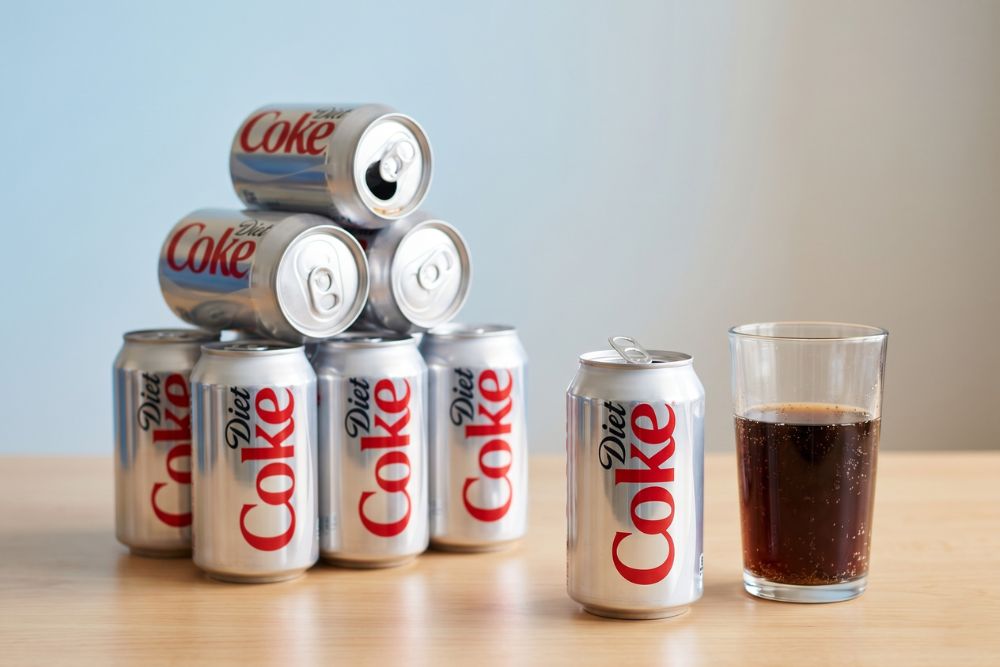
That silver can feels innocent enough. Zero calories, zero sugar, same fizzy satisfaction — what’s not to love?
Millions of people crack open a Diet Coke every single day believing they’re making the smarter choice. But a growing mountain of research suggests that “diet” label might be doing some serious heavy lifting — and not the kind your body benefits from.
Here’s what the science actually says about your favorite guilt-free soda.
Aspartame: The Ingredient That Won’t Stop Making Headlines
Let’s start with the elephant in the room. Aspartame, the primary sweetener in Diet Coke, has been debated for decades. But things got real in July 2023 when the [World Health Organization’s International Agency for Research on Cancer (IARC) classified aspartame as “possibly carcinogenic to humans” — specifically flagging a potential link to liver cancer.
Now, before you toss every can in your fridge, some context matters. That classification (Group 2B) sits in the same category as aloe vera extract, traditional Asian pickled vegetables, and caffeic acid found in coffee. The WHO also reaffirmed the acceptable daily intake at 40 mg per kilogram of body weight — meaning a 154-pound adult would need to down more than nine cans daily to exceed the limit.
The U.S. FDA pushed back, calling aspartame “one of the most studied food additives in the human food supply” and pointing to shortcomings in the studies IARC relied on. Still, the classification sparked a broader conversation: if we’re consuming aspartame across dozens of products — not just soda — how quickly does that daily intake add up?
It Won’t Help You Lose Weight (and Might Do the Opposite)
This one stings. Most people reach for Diet Coke specifically to cut calories. But the research tells a more complicated story.
According to the Cleveland Clinic, artificial sweeteners may trick the brain into craving more high-calorie foods. Your brain detects sweetness and sends signals to prepare for incoming sugar — but those calories never arrive. The result? Increased appetite, stronger cravings, and for some people, overeating later in the day.
A ten-year analysis from the San Antonio Heart Study found that long-term diet soda consumption was actually linked to increased body fat, including stubborn visceral fat around the midsection. People with overweight or obesity who switched to diet soda ended up consuming more calories in food than those who stuck with regular soda.
That doesn’t mean regular soda is better — it absolutely isn’t. But the assumption that diet equals weight loss? It doesn’t hold up the way most people think it does.
Your Gut Microbiome Takes a Hit
This is the area where research has accelerated in recent years, and the findings are worth paying attention to.
Your gut microbiome — the trillions of bacteria living in your digestive tract — influences everything from your immune system to your mood. Emerging studies suggest that artificial sweeteners like aspartame, sucralose, and acesulfame potassium can alter the composition of these microbial communities.
A 2024 study published in Microbiology Spectrum found that synthetic sweeteners directly affected the functional activity of human gut bacteria. Sucralose, in particular, appeared to promote the growth of potentially harmful bacterial families while reducing beneficial ones.
Animal studies have shown even more dramatic shifts — decreases in beneficial Bifidobacterium and Lactobacillus strains, with increases in inflammatory bacteria like E. coli.
Human research is still catching up to these findings, and the effects appear milder in people than in lab animals. But the direction of the evidence isn’t reassuring for heavy diet soda drinkers.
The Diabetes Paradox
Here’s the irony that makes researchers scratch their heads. Diet Coke contains zero sugar, yet multiple large-scale studies have linked daily consumption to a higher risk of Type 2 diabetes.
One major study published in Diabetes Care tracked thousands of participants over several years. Those who drank at least one diet soda daily faced a 67% greater relative risk of developing Type 2 diabetes compared to non-drinkers. The same group showed a 36% increased risk of metabolic syndrome — a cluster of conditions including high blood sugar, elevated blood pressure, and excess belly fat.
How is that possible without actual sugar? Researchers suspect that artificial sweeteners may still trigger insulin release, and repeated spikes could gradually erode the body’s ability to regulate blood sugar properly. There’s also the behavioral angle: feeling “virtuous” about a zero-calorie drink might lead to less healthy food choices overall.
Your Heart Might Not Love It Either
Cardiovascular concerns are another piece of this puzzle that’s hard to ignore. University Hospitals reports that drinking just one diet soda per day may increase the risk of atrial fibrillation (irregular heartbeat) and high blood pressure.
A British analysis combining data from seven major studies with over 308,000 participants found consistent associations between frequent diet soda consumption and adverse cardiovascular outcomes. Post-menopausal women who drank two or more diet beverages daily showed particularly elevated risks for stroke and heart disease.
The phosphoric acid in dark colas adds another wrinkle. This ingredient can leach calcium from bones over time, potentially weakening skeletal health — especially problematic for women already at risk of osteoporosis.
The Caffeine and Addiction Loop
Let’s talk about the habit itself. Diet Coke contains roughly 46 mg of caffeine per 12-ounce can. That’s modest compared to coffee, but here’s the thing — most people aren’t stopping at one.
Three or four cans a day puts you close to the FDA’s recommended daily caffeine cap of 400 mg, especially if you’re also drinking coffee or tea. And caffeine isn’t the only addictive component. The artificial sweetness itself activates reward pathways in the brain, creating a cycle where your body consistently craves that hit.
People who’ve tried to quit often describe withdrawal symptoms — headaches, irritability, fatigue — that mirror those of other stimulant dependencies. That’s not a coincidence.
So, Should You Quit?
Nobody’s saying one Diet Coke at a summer barbecue will wreck your health. The evidence points toward frequency as the real risk factor. Daily, heavy consumption — two or more cans — is where the concerns stack up.
If you’re looking to cut back, here are some practical swaps:
- Sparkling water with a squeeze of citrus gives you the carbonation without any sweeteners
- Unsweetened iced tea or cold brew delivers the caffeine without the additives
- Infused water (think cucumber, mint, or berries) satisfies the craving for flavor
Dr. Walter Willett of Harvard’s T.H. Chan School of Public Health has put it plainly: for people currently drinking diet soda, switching to regular sugar-laden soda would be worse. But the best daily beverages remain water, coffee, and tea.
The Bottom Line
Diet Coke isn’t the health-neutral drink its marketing suggests. From the WHO’s aspartame classification to studies linking daily consumption with weight gain, gut disruption, increased diabetes risk, and cardiovascular concerns — the evidence keeps piling up.
You don’t need to panic over the occasional can. But if your recycling bin is full of silver cans every week, it might be time to rethink that habit. Your body is doing a lot of work behind the scenes. The least you can do is stop making it guess whether the sweetness is real.