Oil just hit a price we haven’t seen since the early days of the Ukraine invasion. And it’s not slowing down.
Brent crude surged past $125 a barrel on Thursday morning, climbing more than 12% in a single session. US benchmark WTI crude broke through $110. The catalyst? Reports that the Trump administration is weighing fresh military strikes on Iran — including the possible deployment of hypersonic missiles to the Middle East.
It’s a sharp escalation in a conflict now entering its ninth week.
Since the US-Iran war erupted on February 28, Brent has risen roughly 64%. WTI isn’t far behind, up about 60%. These aren’t minor fluctuations. This is the kind of price shock that rewrites household budgets and reshapes entire economies.
So what’s driving this latest spike?
Two words: Strait of Hormuz. The narrow waterway between Iran and Oman handles around 20% of the world’s seaborne crude oil. It’s been effectively shut since early March, when Iran declared it closed following US and Israeli airstrikes. The International Energy Agency has called it the largest supply disruption in the history of the global oil market.
That’s not an exaggeration. Global oil supply plummeted by 10.1 million barrels per day in March alone, according to the IEA’s April report. OPEC+ production fell by 9.4 million barrels per day month-on-month. Countries like Iraq, Kuwait, and Saudi Arabia had no choice but to shut in wells once local storage filled up.
President Trump isn’t backing down. On Wednesday, he told Axios that the naval blockade of Iranian ports was working. He’s also reportedly ordered preparations for a prolonged extension of the blockade, with his team laying the groundwork for a longer-term closure of the Strait.
Iran isn’t budging either. President Masoud Pezeshkian told Pakistan’s prime minister that US actions were undermining trust. Tehran has refused to reopen the Strait until the US lifts its naval blockade. An Iranian deputy parliament speaker went further, stating that Iran had realized controlling the Strait and Bab al-Mandab could affect 25% of the global economy.
Peace talks? Stalled. Pakistan may receive Iran’s revised proposal by Friday, but Trump has expressed frustration that Tehran’s offer doesn’t address nuclear ambitions.
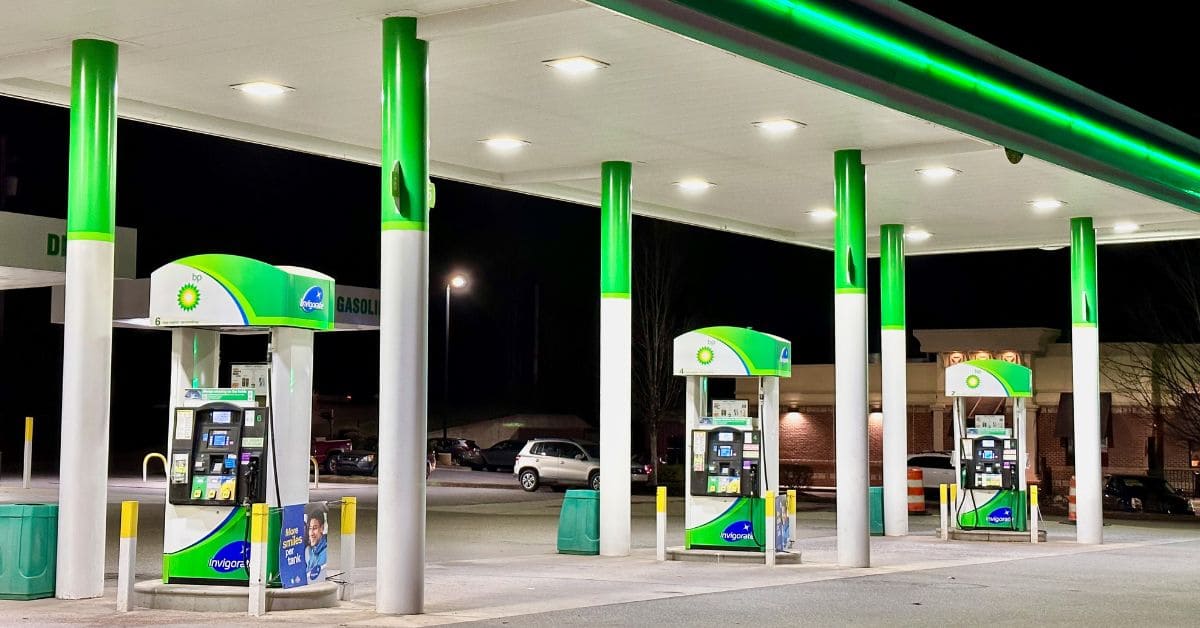
At the pump, Americans are paying for it. The national average for regular gas hit $4.23, a four-year high, according to AAA. That’s up 42% since the war started. In California, drivers are already paying nearly $5.90. In Los Angeles, some stations have posted prices above $8 a gallon.
But the pain extends far beyond US borders. Asian economies — which received about 84% of crude oil shipments through the Strait in 2024 — are bearing the heaviest burden. The Philippines declared a national energy emergency in late March. Bangladesh faces recession-like conditions. Vietnam has slashed fuel levies but prices remain punishing.
Europe isn’t spared either. The continent is staring down a potential replay of the 2022 energy crisis. Gas storage levels were already low after a brutal winter, and Dutch TTF gas benchmarks nearly doubled by mid-March.
The IMF has warned bluntly: all roads lead to higher prices and slower growth.
The fertilizer problem makes things worse. The Persian Gulf accounts for roughly 30-35% of global urea exports. Those shipments are now stranded. With Northern Hemisphere planting season underway, disruptions to crop nutrients could push food prices higher well into 2027. Unlike oil, there are no strategic fertilizer reserves to cushion the blow.
The Dallas Federal Reserve has modeled the worst-case scenarios. Even a single-quarter closure of the Strait could lower global GDP growth by an annualized 2.9 percentage points. If the closure drags on, the damage multiplies.
Meanwhile, suspicious trading activity has raised eyebrows. The Financial Times reported that hundreds of millions of dollars in bets against oil prices were placed just minutes before Trump announced policy shifts — on at least three separate occasions. Insider trading investigations may follow.
Where does this go from here? Nobody knows. The IEA’s baseline forecast assumes Middle East oil flows resume by mid-year. But the agency itself admits that scenario may be too optimistic.
What’s clear is this: $125 oil isn’t just a number on a trading screen. It’s higher grocery bills. It’s more expensive flights. It’s factory closures in Asia and fuel rationing in developing nations. It’s the kind of price that changes behavior — and possibly elections.
The world hasn’t seen an energy crisis this severe since the 1970s. And unlike the oil shocks of that era, this one is unfolding in an already fragile global economy still digesting trade wars, inflation, and pandemic aftershocks.
Keep watching the Strait of Hormuz. Everything depends on it.